The Battle Cats
- 4.5
- Rating
- 10.00M
- Installs
- Free
- Price

 Analysis by App-foxy
I came to The Battle Cats expecting a simple lane-defense game with a silly art style, but I found something more demanding underneath the jokes. The basic idea is easy to understand: send out strange cats, manage your resources, and push through enemy lines. The real appeal appears after the first few stages, when choosing the right unit, timing a deployment, and deciding when to save resources becomes more important than tapping quickly.
That mix makes it a good fit for short gaming sessions, although it is not as mindless as its appearance suggests. It is a free casual game from PONOS Corporation, available for Android, and it has built a large audience with an average rating of 4.5 from around 603,000 ratings and more than 10 million installs. I can see why it has lasted: the presentation is deliberately odd, the battles are easy to start, and there is enough room for planning to keep the campaign interesting.
How a normal Battle Cats session actually works
The first useful habit is to treat each stage as a small puzzle rather than a race. You begin with limited resources, and your base produces the money needed to deploy cats. Sending everything immediately can feel productive, but it often leaves you unable to answer the first serious enemy wave. I usually start by watching the opening seconds, building a modest frontline, and keeping enough money available for a unit that can change the shape of the fight.
You May Also Like

 Google Keep - Notes and lists
Google Keep’s Quiet Growth Shows the Appeal of Simpler Notes
As mobile work gets busier, Google Keep keeps winning a simple contest: capture a thought quickly, find it later, and get on with the day.

 Blood Strike: 2.5 Anniversary
Blood Strike’s Loadouts Turn Every Drop Into a Tactical Gamble
A close look at Blood Strike’s custom loadouts: how fast access to signature weapons reshapes its battle royale rhythm, rewards preparation, and narrows the gap between fights.

 Pandora - Music & Podcasts
Pandora’s Music Is Easy to Start, but Harder to Recover
Pandora’s strength is its low-effort path from a seed to a station. Its weak spot is how much confidence it asks you to place in connection, setup, and quiet recovery.

 8 Ball Pool
 Is Built on Rivalries, Rematches, and Routine
A close look at the rivalries, rematches, shared routines, and unanswered safety questions that turn a quick pool match into a persistent mobile community.

 Samsung Music
’s Quiet Strength Is Playing What You Already Own
Its reach comes less from spectacle than from dependable access to a personal library. That simplicity is both the app’s strongest retention engine and its ceiling.

 AccuWeather: Weather Radar
AccuWeather Review: A Quick, Clear Forecast for Everyday Decisions
For everyday plans, the best forecast is the one you can understand quickly. AccuWeather makes rain timing, radar, and local conditions easy to act on, with a few trade-offs.
More From Our News Desk



The controls are uncomplicated, which is one reason the game works well on a phone. You tap a unit icon when you can afford it, and the cat moves toward the enemy base automatically. That simplicity leaves the important decisions exposed. You are not aiming or steering individual characters; you are judging distance, cooldowns, enemy pressure, and the order in which your team should enter the field.
A balanced lineup matters more than filling every slot with the strongest-looking character. Cheap cats can absorb hits and protect slower attackers, while long-range units may do more damage but need time and space to work. Some stages punish a team that is too slow, while others punish a lineup that has no durable front line. I found it more useful to build around a clear plan than to change every unit after one failed attempt.
The game also rewards remembering what went wrong. If an enemy reaches your base because the first group collapsed, the answer may be a sturdier blocker rather than a stronger attacker. If your units survive but cannot finish the stage, the problem may be poor damage range or an ineffective timing pattern. Replaying with one deliberate change is usually more productive than randomly swapping the entire roster.
That is where the casual label becomes slightly misleading. A stage can take only a few minutes, but learning its rhythm may take several attempts. I like this because progress feels earned, yet players looking for a purely relaxing idle experience may find the repeated failures irritating. The game asks for attention in short bursts, especially when a promising attack begins to unravel.
What I check before spending resources
Before starting a difficult stage, I look at the team as a sequence rather than a collection of individual cats. Which unit can reach the front quickly? Which one is affordable enough to deploy repeatedly? Which attacker needs protection? Thinking in that order helps prevent the common mistake of choosing several expensive units that all arrive too late to matter.
I also pay attention to the economy of a battle. Saving for a powerful unit is tempting, but hoarding too long can allow enemies to advance beyond the point where a single deployment helps. On the other hand, filling the field with low-impact cats can drain the money needed for a decisive counterattack. The best rhythm is often a controlled opening followed by a stronger push once the frontline is stable.
One practical technique is to use the early part of a stage as reconnaissance. If the first enemy is harmless, I let the money reserve grow and deploy only enough defense to avoid losing ground. If the opening pressure is severe, I stop thinking about an ideal lineup and focus on keeping the base safe. This makes retries more informative because I know whether the failure came from the setup or from the timing.
Another useful habit is to avoid changing several variables at once. I might replace one blocker, move one ranged attacker, or alter the order of deployment, then try again. That sounds slow, but it teaches the stage faster than constantly rebuilding the team. The game has enough unusual enemies and unit interactions that small experiments often reveal more than a dramatic overhaul.
Settings and everyday play habits worth checking
The most valuable “setting” in practice is the way I organize my attention. I keep a dependable team ready for ordinary progress and reserve experimentation for stages where the current plan clearly fails. This reduces the friction of returning to the game after a break. Instead of trying to remember every detail, I can begin with a familiar formation and adjust only when the stage demands it.
I also recommend checking the game’s available options when you first install it, especially sound and notification preferences that affect how comfortably it fits into your routine. I prefer playing with audio at a level that lets me notice battle feedback without making a short session disruptive. The exact choices depend on your phone and habits, but small adjustments matter when the game is used during commutes, breaks, or quiet evenings.
Because this is a free-to-play title, I would also review purchase controls before handing the phone to a child. The game carries a Teen content rating, and its optional purchases range from $0.49 to $146.99 per item. That does not make spending unavoidable, but it does make awareness important. I treat paid options as a convenience decision, not as part of the basic control scheme, and I would set device-level safeguards if someone else uses the account.
For everyday play, I prefer short sessions with a specific purpose. One session might be for clearing a familiar stage, another for testing a lineup, and another for collecting progress when I have more time. This approach prevents the game from turning into aimless tapping. It also makes the energy and retry structure feel less frustrating because I am not expecting every visit to produce a major breakthrough.
A realistic example is a ten-minute break during a busy day. I can open the game, replay a stage I already understand, and practice a deployment order without needing a long uninterrupted story sequence. If I am tired, I avoid a new difficult stage because a mistake there can consume the whole break. The same game therefore serves both as a quick distraction and as a deeper strategy challenge, depending on how deliberately I approach it.
Faster patterns that make battles less wasteful
The fastest players are not necessarily tapping the most. They are reducing unnecessary decisions. I try to identify a repeatable opening for each familiar stage: one or two early units, a pause while resources build, then a planned transition into the main attack. Once that pattern works, I can spend my attention on the enemy that actually changes the battle instead of constantly reconsidering the first few seconds.
Deployment order is especially important. A fragile attacker placed before protection may walk into danger and disappear before contributing much. The same attacker behind a cheap blocker can keep firing long enough to justify its cost. I do not assume that the most powerful unit belongs at the front of the sequence; often, the correct role is to create time for another unit to operate.
I also avoid chasing a collapsing frontline with frantic deployments. When several cats are defeated at once, sending replacements one by one can create a cycle where each arrives too late. In that situation, I save for a more meaningful response or restart with a better opening. This is one of the clearest trade-offs in the game: immediate activity feels reassuring, but disciplined timing usually produces a stronger push.
For repeatable stages, I keep notes mentally around three questions: what starts the enemy pressure, which unit causes the first real problem, and when the stage turns in my favor. I do not need a detailed spreadsheet for most battles. Remembering those three points is enough to make a retry faster and less random. It also helps me decide whether a loss was caused by poor timing or by a team that simply lacks the required tools.
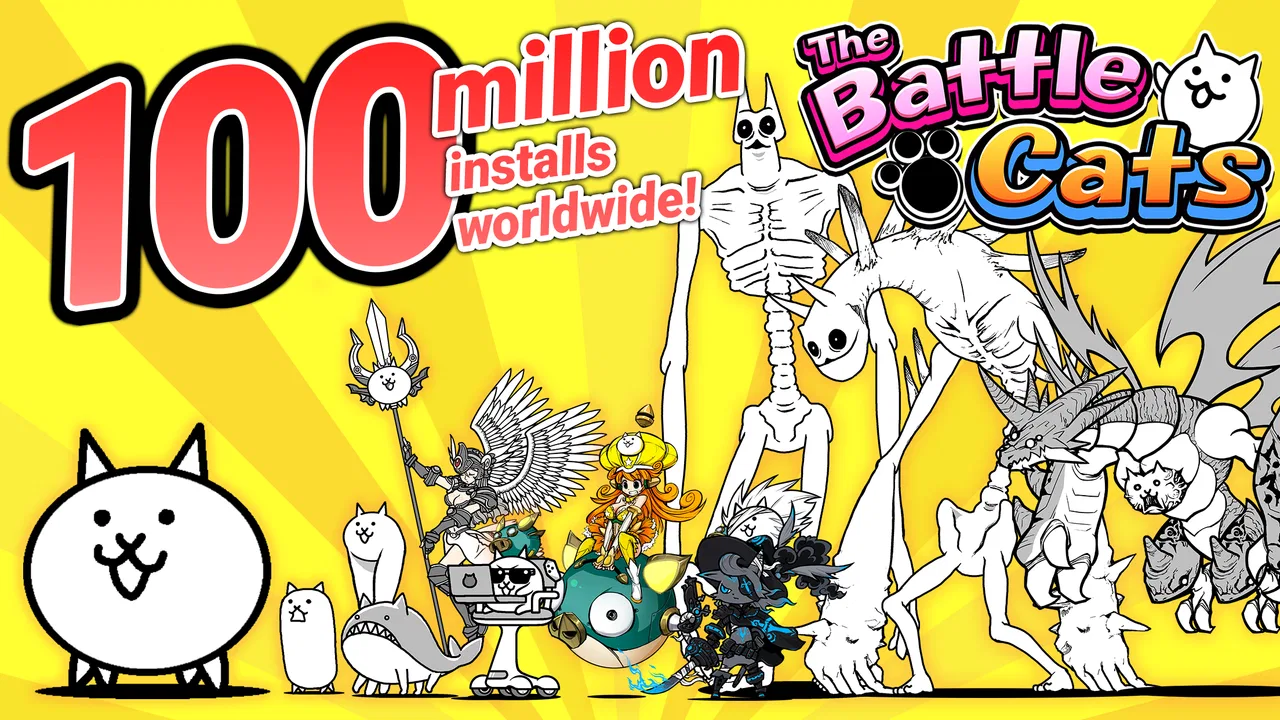
The game’s humor makes experimentation easier to tolerate. Cat designs are intentionally strange, and the battlefield can look ridiculous even when the underlying decision is serious. That contrast is a strength. A conventional military-themed interface might make repeated losses feel heavy; here, the visual absurdity keeps the mood lighter while I work through the same stage again.
Where the deeper strategy reaches its limits
There is a ceiling to how much planning can solve. Some progress eventually depends on having suitable units, improving them, or returning later with a better-developed roster. Skillful timing can stretch a team, but it cannot always replace missing range, durability, or damage. I appreciate that the game has this layer, although it can make a blocked player feel that the answer is progression rather than cleverness.
That is also where the free-to-play structure deserves honest attention. The game can be enjoyed without paying, but optional purchases may look attractive when a stage has become repetitive. I would not spend simply because I am impatient after one difficult attempt. First I would test a different formation, improve the order of deployment, and confirm that I understand the stage’s threat. Spending can reduce friction, but it does not remove the need to learn the battle.
The large roster can create another kind of friction: choice overload. New players may see many unusual cats and assume every one deserves immediate investment. I found it better to develop a small group with complementary jobs before spreading resources widely. A reliable blocker, a useful attacker, and a unit suited to the stage’s range requirements are more valuable than a collection of poorly prepared specialists.
Compared with ordinary casual games, this one asks for more memory and patience. A match-three game may let you reset your attention instantly, while this title often rewards remembering an enemy pattern and repeating a successful sequence. Compared with a traditional tower-defense game, it is more direct because you deploy mobile units rather than placing a detailed network of towers. That makes it approachable, but it also means the battlefield can feel less controllable when a push goes wrong.
Players who want a calm game with no pressure to revisit stages may prefer a puzzle app with self-contained rounds. Players who enjoy collecting units, testing combinations, and gradually understanding odd enemy behavior will probably find more lasting value here. I would also skip it if you dislike cartoon absurdity, repeated attempts, or free-to-play stores that present optional purchases during a long progression path.
Who will get the most from it
I recommend it to someone who wants a game that starts casually but rewards attention. It is easy to play with one hand, simple enough to understand without a long tutorial, and deep enough to make a familiar stage feel different after a lineup change. The unusual art is not just decoration; it gives the game a recognizable personality and makes the growing roster memorable.
It is particularly good for players who enjoy learning through retries. You do not need perfect reflexes, and the controls are not mechanically demanding. The challenge comes from deciding what to deploy, when to wait, and how to respond when the enemy changes the pace. That makes it a good choice for thoughtful players who prefer planning over rapid tapping.
I would be more cautious recommending it to younger children because of the Teen rating and the presence of in-app purchases. I would also warn anyone with limited patience that progress may become uneven. The early experience can feel wonderfully accessible, but later obstacles may require more preparation than the cheerful presentation suggests.
My verdict after building a repeatable routine
The Battle Cats works because its surface is playful while its battles quietly demand good habits. I enjoy opening it for a quick stage, but I stay for the small strategic questions: whether to save, which unit should lead, and whether a failed attempt revealed a real weakness. The best experience comes from treating each retry as an experiment rather than as a button-mashing contest.
PONOS Corporation has made a casual game with a surprisingly durable core. It is free to start, has remained available since September 16, 2014, and the current version is 15.1.1, with Android support from version 7.0 onward. Those details matter mainly because they show that this is an established mobile game rather than a brief novelty, but the reason I would recommend it is simpler: the battles remain readable, funny, and satisfying when I approach them with a plan.
My final advice is to begin slowly, build a dependable team, and resist spending just to force a single victory. Check the settings so the game fits your daily routine, use repeatable openings for stages you know, and change one part of a lineup at a time when you are stuck. If you enjoy strange characters wrapped around genuine tactical choices, this is well worth trying; if you want completely frictionless casual play, its later demands may not suit you.
FAQs for The Battle Cats
01What is the main objective of The Battle Cats?
The Battle Cats is a tower defense game where the primary goal is to protect your base by deploying a variety of quirky and unique cats to fend off waves of enemies. Players progress through different levels, each with increasing difficulty, requiring strategic planning and upgrades to succeed.
02How do I unlock new cats in The Battle Cats?
New cats can be unlocked by progressing through levels, earning experience points, and using in-game currency like cat food or tickets. Players can also participate in special events and missions to unlock rare and powerful cats, enhancing their army's capabilities.
03Are there in-app purchases in The Battle Cats?
Yes, The Battle Cats offers in-app purchases that can enhance gameplay. Players can buy cat food, which is used to unlock premium features, and expedite progress. However, the game can still be enjoyed without purchases, as there are opportunities to earn rewards through regular gameplay and events.
04Is an internet connection required to play The Battle Cats?
While The Battle Cats can be played offline for the main stages, an internet connection is required for certain features such as downloading updates, participating in special events, and accessing the game's store. To fully enjoy all aspects, occasional internet access is necessary.
05What age group is The Battle Cats suitable for?
The Battle Cats is suitable for players aged 9 and above. It features cartoony graphics and lighthearted gameplay, making it accessible to younger audiences. However, the strategic elements and in-app purchases are better suited for older players who can manage these aspects responsibly.
Pros
- Unique and quirky cat characters.
- Simple
- intuitive gameplay mechanics.
- Frequent updates with new content.
- Offline play available for travel.
- Engaging strategic elements in battles.
Cons
- In-app purchases can be expensive.
- Repetitive levels may bore some players.
- Requires internet for certain features.
- Graphics may not appeal to everyone.
- Energy system limits playtime.

The Battle Cats
Gallery